

Postpartum Hair Shedding 101: What's Normal, When It Peaks, and What Actually Helps
Postpartum hair shedding can feel alarming, especially when you are already adjusting to life with a new baby. You may notice more hair in your brush, loose strands around the house, or thinning around your edges after pregnancy. The good news is that understanding the hair-growth cycle gives you a clearer place to begin. With gentle postpartum hair care, lower-tension styling, nourishing habits, and consistent support, you can care for your scalp and strands while your body continues to recover.
Meta title suggestion: Postpartum Hair Shedding 101: What’s Normal and What Helps
Meta description suggestion: Learn when postpartum hair shedding starts, when postpartum hair loss peaks, why thinning edges happen after pregnancy, and practical care tips for textured hair.
What Is Postpartum Hair Shedding?
Postpartum hair shedding, also called postpartum hair loss or postpartum telogen effluvium, is a temporary shift in the hair-growth cycle that commonly occurs after childbirth.
Your hair naturally moves through three phases:
- Anagen: the active growth phase
- Catagen: a short transition phase
- Telogen: the resting phase, after which the hair eventually sheds
During pregnancy, increased estrogen levels can keep more hairs in the active growth phase. This is one reason many women notice fuller, thicker-looking hair while pregnant.
After birth, estrogen levels decline. More hairs may move into the resting phase at the same time. Several weeks later, those hairs shed together. In other words, postpartum hair shedding is often delayed, it may not begin immediately after delivery.
According to Cleveland Clinic, many women notice postpartum hair loss around three months after childbirth, and the shedding phase is usually temporary.
When Does Postpartum Hair Loss Start and Peak?
Every mother’s timeline is different, but a common pattern looks like this:
- Two to four months postpartum: You may begin noticing more shedding than usual.
- Three to five months postpartum: Shedding may become more noticeable or reach its most active point.
- Six to twelve months postpartum: Shedding often gradually settles, and fullness may begin moving closer to your previous baseline.
Some mothers notice changes earlier, while others see their most significant shedding around five or six months after birth. Your experience can also be influenced by sleep disruption, nutritional deficiencies, stress, illness, thyroid changes, or the way your hair is styled.
The important thing to remember is that hair recovery takes time. A 30-day routine can help you become more consistent with scalp and hair care, but it cannot change the natural pace of the hair-growth cycle overnight. Give yourself a three-to-six-month window to observe changes in your routine, comfort, breakage, and shedding patterns.
What Does Postpartum Hair Shedding Look Like?
Normal postpartum hair loss is usually diffuse, meaning shedding occurs across the scalp rather than in one sharply defined area.
You may notice:
- More hair on your pillow, clothing, or bathroom floor
- Extra strands during wash day or detangling
- A smaller-looking ponytail or bun
- Increased visibility around your part
- Short regrowth hairs around the hairline
- Thinning edges after pregnancy
- A scalp that feels drier, oilier, itchier, or more sensitive than usual
For Black women and women with textured hair, shedding can look especially dramatic when you wear a low-manipulation style. Hair that would normally shed gradually may remain caught in braids, twists, locs, extensions, or a stretched style. When you finally detangle or take the style down, several days or weeks of shed hair may appear at once.
That does not automatically mean you are losing more hair than someone with a different hair texture. However, textured hair can be more vulnerable to dryness and breakage, so it is important to distinguish between hair shedding from the follicle and breakage along the strand.
Shedding Versus Breakage
A shed hair usually has a small club-shaped bulb at one end. A broken strand may be shorter and lack that bulb.
Breakage can increase when your hair experiences:
- Tight braids, ponytails, wigs, or sew-ins
- Frequent heat styling
- Aggressive detangling
- Dryness and lack of conditioning
- Repeated chemical processing
- Heavy extensions or added hair
- Friction from cotton pillowcases or rough fabrics
You may be experiencing postpartum shedding, breakage, or both. A gentler routine can help reduce avoidable damage while your follicles move through their normal postpartum cycle.

Why Are My Edges Thinning After Pregnancy?
Thinning edges after pregnancy can be connected to postpartum shedding, but styling tension may also play a role.
The hair around your temples and hairline is often finer and more delicate than the hair in other areas. It can be affected by:
- Tight braids or cornrows
- Wigs secured with combs, adhesives, or tight bands
- Sew-ins with excessive tension
- Slicked-back styles
- Repeated brushing or edge control application
- Heavy extensions
- Frequent pulling during nighttime styling
When tension repeatedly pulls on the follicle, it may contribute to traction-related thinning. This is different from normal diffuse postpartum hair shedding, which is influenced by hormone-related changes in the growth cycle.
How to Protect Your Hairline
Try these lower-pressure adjustments:
- Choose looser braids, twists, buns, or ponytails.
- Avoid installing extensions that feel painful or cause a headache.
- Give your edges styling breaks between appointments.
- Sleep in a satin bonnet or use a satin pillowcase.
- Avoid brushing your hairline repeatedly throughout the day.
- Ask your stylist to reduce tension, especially around your temples.
- Apply products with your fingertips rather than rubbing or scratching aggressively.
Your hairline does not need perfection right now. It needs less tension, more patience, and consistent care.
How to Stop Postpartum Hair Loss: What Actually Helps?
You cannot always stop normal postpartum telogen effluvium because it is part of a hormone-related hair-cycle change. However, you can support your scalp, protect your strands, and reduce additional breakage.
1. Keep Your Routine Simple
Life with a baby may not leave room for a complicated regimen. Start with a few repeatable steps:
- Cleanse your scalp and hair according to your texture, style, and comfort.
- Condition your strands to support softness and easier detangling.
- Use a gentle touch when manipulating your hair.
- Moisturize dry areas instead of coating your entire style or scalp.
- Choose styles that do not pull at thinning areas.
- Track changes once a week rather than checking your hair repeatedly each day.
Small actions become powerful when they are realistic enough to repeat.
2. Nourish Your Scalp and Hair
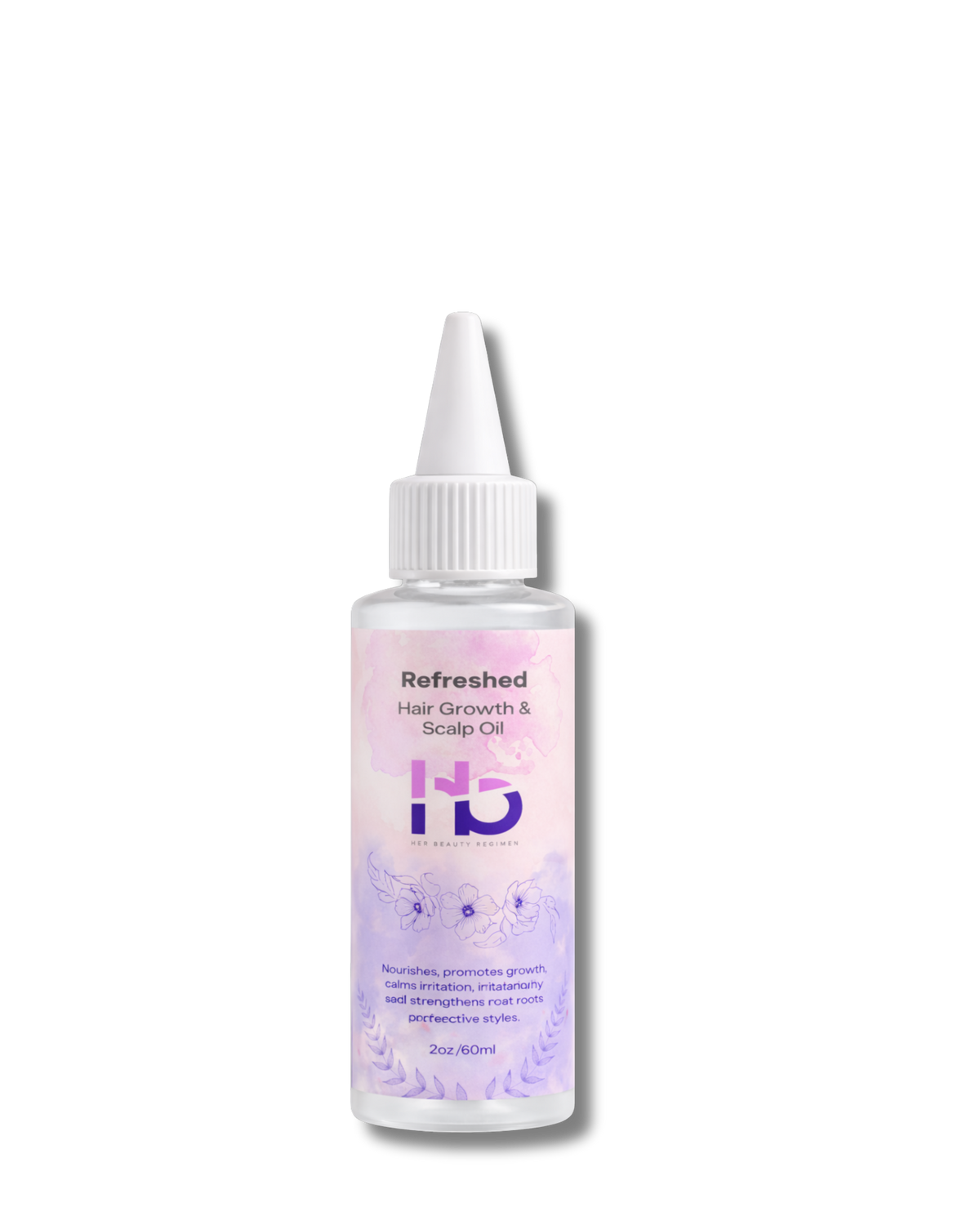
The Refreshed Hair & Scalp Oil is included as a physical essential in every Hair Recovery System. Its blend includes jojoba, avocado, castor, and sweet almond oils.
Use a few drops on dry-feeling areas along your scalp, parts, edges, or hairline. Massage gently with your fingertips two to three times per week, or as needed. Start with a small amount so your hair does not feel weighed down.
This is cosmetic scalp and hair care. It can help support a more comfortable, nourished-feeling routine, but it does not diagnose or treat postpartum hair loss and does not guarantee regrowth.
3. Support Your Body From the Inside
Hair is not separate from postpartum recovery. Adequate nourishment, hydration, rest when possible, and emotional support all matter.
Focus on manageable choices:
- Add a protein source to meals and snacks.
- Keep water near your feeding or pumping station.
- Include iron-rich foods when appropriate for your diet.
- Ask your healthcare provider whether testing for iron or thyroid concerns makes sense for you.
- Do not begin high-dose iron, biotin, or other supplements without professional guidance.
If you had significant blood loss during delivery, ongoing fatigue, dizziness, or other concerns, bring them up with your OB/GYN or primary care provider.
4. Use a Plan That Meets You Where You Are
Postpartum hair care for Black women should account for textured hair, protective styles, moisture retention, detangling, breakage, and edge tension, not just generic advice.
The Postpartum Hair Recovery Plan provides a personalized 30-day framework based on your postpartum timing, hair concerns, routine, available energy, food preferences, and goals. It brings together:
- Hair and scalp care
- Gentle styling guidance
- Nutrition and hydration cues
- Movement that fits your recovery
- Weekly education and progress support
- Shorter “hard day” options for busy moments
The plan is designed with Black mothers and textured hair-care realities at the center, while welcoming mothers of any background with curly, coily, natural, relaxed, or transitioning hair.
When Should You See a Healthcare Professional?
Postpartum hair shedding is common, but not every type of hair loss should be assumed to be hormonal.
Please contact a licensed healthcare professional if you experience:
- Sudden or severe hair loss
- Pain, burning, swelling, or significant scalp tenderness
- Clearly defined bald patches
- Rapid recession concentrated around the hairline
- Scaling, sores, or signs of infection
- Shedding that continues without improvement beyond the expected postpartum period
- Ongoing fatigue, dizziness, unusual cold sensitivity, palpitations, or unexplained weight changes
These symptoms may point to an issue such as iron deficiency, thyroid changes, alopecia areata, traction-related hair loss, or another condition that requires evaluation.
This article and the Postpartum Hair Recovery Plan provide wellness and cosmetic guidance. They do not diagnose or treat medical conditions and do not replace care from a physician, dermatologist, OB/GYN, or other licensed healthcare professional.
A Gentle Postpartum Hair Recovery Checklist
If you are unsure where to begin, use this simple checklist for the next 30 days:
- Take one photo of your hairline or part for your private progress records.
- Reduce tension in your next hairstyle.
- Choose one consistent wash-day or scalp-care cue.
- Detangle in sections, starting at the ends.
- Use a few drops of a lightweight oil on dry areas as needed.
- Add one reliable protein or hydration habit.
- Write down any scalp pain, patchiness, or unusual changes.
- Reassess monthly: not hourly.
Your Hair Recovery Is a Journey
Postpartum hair shedding can be confusing, but you do not have to navigate it through fear or guesswork. Hormonal changes may explain much of what you are seeing, while gentle styling, scalp nourishment, supportive nutrition, and consistent routines can help you care for your hair during the transition.
Start with one manageable step. Protect your edges from unnecessary tension. Nourish your scalp without overcomplicating your routine. Give your body time to recover, and seek professional guidance when something feels sudden, painful, patchy, or concerning.
Your postpartum hair-care journey does not need to be perfect to be meaningful. It can be simple, patient, and rooted in the decision to care for yourself as fully as you care for your baby.